 Congratulations to Amanda Kennedy, PharmD, Professor of Medicine on being recognized with the UVM Distinguished Mentor Award! Well-deserved indeed!
Friday, June 10, 2022
Kennedy named as distinguished mentor
Congratulations to Amanda Kennedy, PharmD, Professor of Medicine on being recognized with the UVM Distinguished Mentor Award! Well-deserved indeed!

Wednesday, June 8, 2022
Bonnell on the association of post-lung transplant mortality with pre-transplant kidney function
Congratulations to Levi Bonnell, MPH on this recent publication:
Abhishek
Kumar, Levi N Bonnell, Michael Eberlein, Christie P Thomas. The
U-shaped association of post-lung transplant mortality with
pre-transplant eGFR underscores possible limitations of creatinine-based
estimation equations for risk stratification. The Journal of Heart and Lung Transplantation,
2022, https://doi.org/10.1016/j.healun.2022.05.018.
(https://www.sciencedirect.com/science/article/pii/S1053249822019738)
Abstract: Background: Pre-existing chronic kidney disease (CKD) may have an impact on post-lung transplant survival and the development of end stage kidney disease (ESKD).
Methods: We analyzed the US transplant database from 2006 to 2020. Adult patients who received their first lung transplant and were not on dialysis were included. Multivariable Cox regression was used to assess the effect of pretransplant eGFR on mortality and cumulative incidence competing risk was used to explore the effect on ESKD.
Results: The adjusted hazard ratio (aHR) for mortality showed a “U” shaped association with eGFR with a rising mortality at <60 and >100 ml/min/1.73m2. The increase in mortality with higher eGFR was only seen in those < 30 year and were primarily in whites with a lower body mass index and in patients with cystic fibrosis (CF). The aHR for ESKD increased below an eGFR of 100 rising to 1.74 at an eGFR of 60. Any decrease in eGFR between listing and transplant >10% was associated with higher risk of ESKD.
Conclusions: The U-shaped association of pretransplant eGFR with post-transplant mortality correlated with younger age, lower BMI and a diagnosis of CF. The aHR for ESKD following lung transplantation increased exponentially with worsening eGFR pretransplant.
Saturday, June 4, 2022
Bonnell on the Natural Environment and Health
Congrats to Levi Bonnell, MPH on the publication of his latest work: Bonnell LN, Littenberg B. Nonlinear Relationships among the Natural Environment, Health, and Sociodemographic Characteristics across US Counties. International Journal of Environmental Research and Public Health. 2022; 19:6898. https://www.mdpi.com/1660-4601/19/11/6898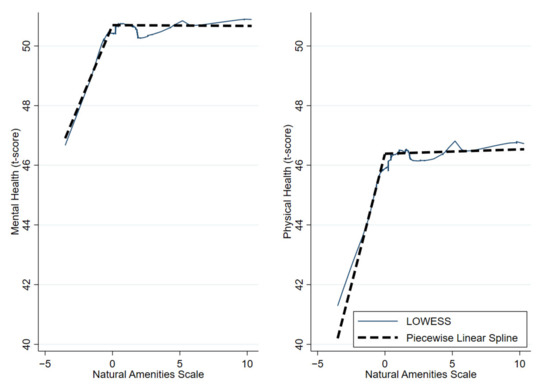
Thursday, May 26, 2022
Clinical Research Oriented Workshop (CROW) Meeting: May 26, 2022
Present: Justine Dee, Juvena Hitt, Ben Littenberg, Charlie MacLean, Jen Oshita, Adam Sprouse-Blum, Connie van Eeghen (7)
1. Warm Up: Jen had a good experience at a workshop/conference related to Implementation Science, but the speech and hearing professional organization declined to participate, losing out on great tools and infrastructure.
2. Jen’s Manuscript “Nationally Representative Prevalence of Communication Disabilities Among Community Dwelling, Older Adults in the US.” Jen has had difficulty getting it published. The current theory is that there is no modeling, it is a basic prevalence and descriptive paper comparing older adults with communication disabilities, to those without. Last rejected by Disability and Health. She is going to submit to Journal of Communication Disorders this round. May be of interest to an epidemiological journal. Jen’s two questions for the group are:
a. Intro: Does the framing of the introduction fit and justify publication of this paper, or does it seem to overstate what I am doing? Is “just prevalence” too lean a topic? Looks at Communication Disabilities (CDs) as a whole, not as many separate conditions/issues.
i. Why care: government entities/insurance cos making policy; provider/organization operationalizing better patient care
ii. Elderly population is growing, so this issue will grow too
iii. Good topic; important too
b. Discussion: Is the comparison of findings to prior literature helpful? Since the comparisons are uneven, I wonder if it is more distracting than helpful.
i. Start this section with the third sentence
ii. Our study produced different results from the limited comparators, probably due to different measures
1. Explain the differences, don’t explain similarities
2. This is an important part of the Discussion section
3. We note that patients with CDs also have lower access, social supports… and may need additional supports beyond those that specifically address their CDs
c. Other
i. Main message of the paper is in tables and figures. The two tables are almost the same; can it be one table? Main message: what is the size of this population and what are the implications for organizations caring for this population. Accommodations vary by CD subgroup, except that they all require documentation. “We need to know what’s out there in order to respond to it.”
ii. A target population of 1m people is also large enough to attract attention and invite investment.
iii. Figures
1. Recheck numbers
2. Consider making circle sizes match the proportion of the values they represent
3. Why Figure 2? Removes people that have already been identified with cognitive impairment and thereby likely already receiving services. Should the text and figure focus on those that can be helped at the institutional policy level – not high need individuals? Consider reviewing and addressing only in the results section. Match to the main message and stay consistent.
iv. Consider tests of significance between subgroups
3. Next week: TBD
Recorded by: CvE
Wednesday, May 25, 2022
FW: Telehealth Advances in the COVID-19 Era - an NNE-CTR Seminar this Friday, May 27th from 12-1pm
Good morning, everyone,
This week’s NNE-CTR Seminar Series is featuring a talk on “Telehealth Advances in the COVID-19 Era”, and it is one you won’t want to miss! Hosted and moderated by Dr. Charlie MacLEan, Associate Dean for Primary Care at the Larner College of Medicine at UVM, he will be joined by Dr. Alexa Craig, Neonatal & Pediatric Neurologist at MaineHealth, Dr. Tracy Jalbuena, Clinical Lead for Telehealth at Maine Health, and Dr. Matthew Siket, Associate Program Direct for the UVM EM Residency Program.
Join us as this panel of experts talk about some recent advances in their respective fields, and best practices in training us all to work with telehealth systems.
Telehealth Advances in the COVID-19 Era
Friday, May 27th, 12-1pm
Join Zoom Meeting
https://uvmcom.zoom.us/j/99224763994
Please feel free to share this announcement and meeting link with your colleagues!
Thank you,
Sheila Clifford-Bova

University of Vermont
Larner College of Medicine
Biochemistry Department
B420 Given Hall
Burlington, VT 05405
Tuesday, May 24, 2022
Job Posting - UVM Center on Rural Addiction
From Gail-
There are some job openings with the UVM Center on Rural
Addiction www.uvmcora.org
. I’d like to get the word out in case anyone knows people who might be
interested in applying.

Wednesday, May 11, 2022
FW: Science Communication Training for Faculty, Post-Docs, and Graduate Students - June 21 & 22, 2022
| | |||
| |
| | |

|



Subscribe to:
Posts (Atom)


 Posts
Posts

